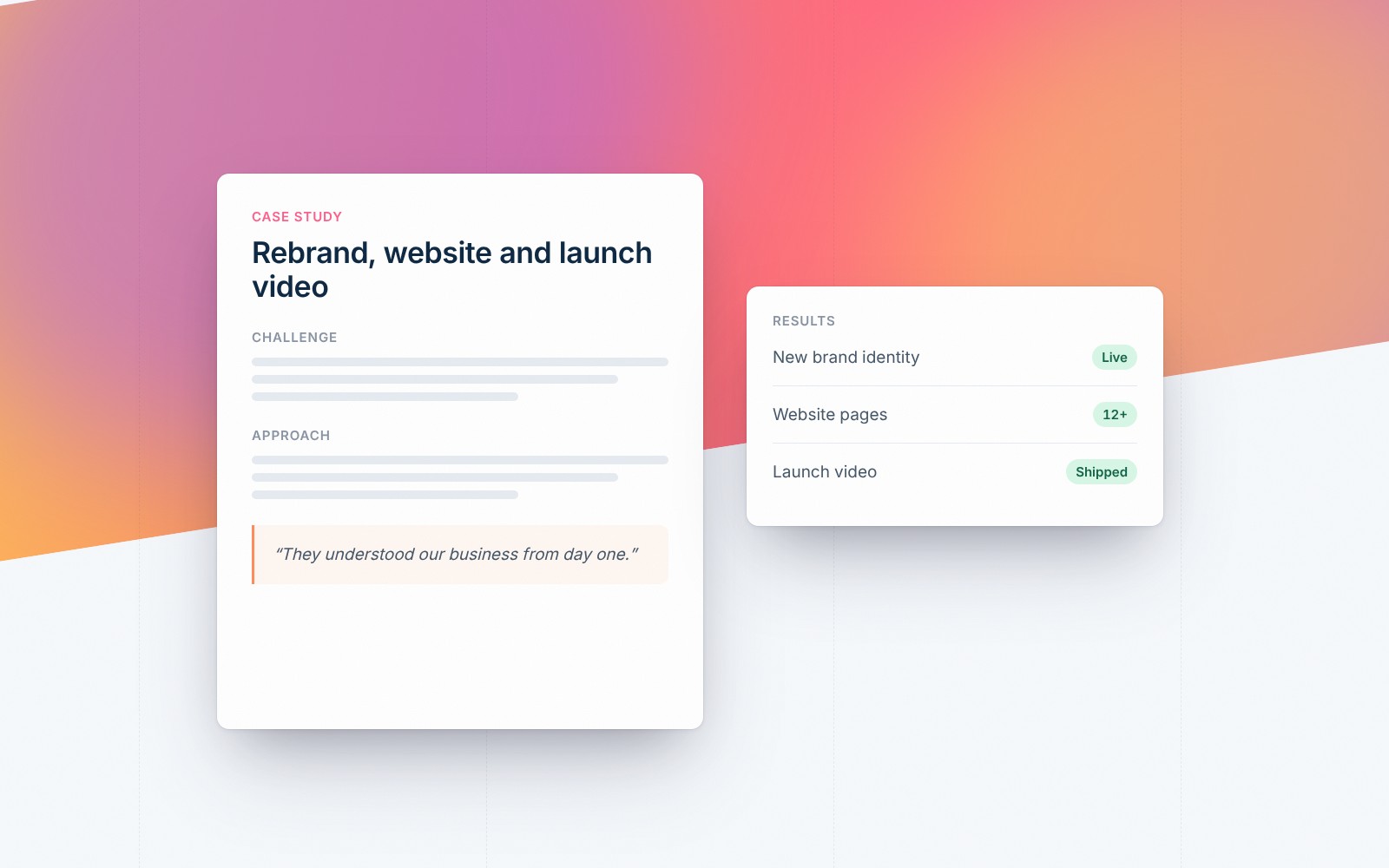
After weeks of planning, design and build, a new website goes live. Everyone breathes a sigh of relief.
Then nobody touches it for two years.
Slowly, things drift. A team member leaves but is still on the About page. A form stops sending emails. Old offers stay up. Rankings slip as competitors publish fresh content.
None of it is dramatic. All of it costs you. Here’s what ongoing care actually involves, and why it matters.
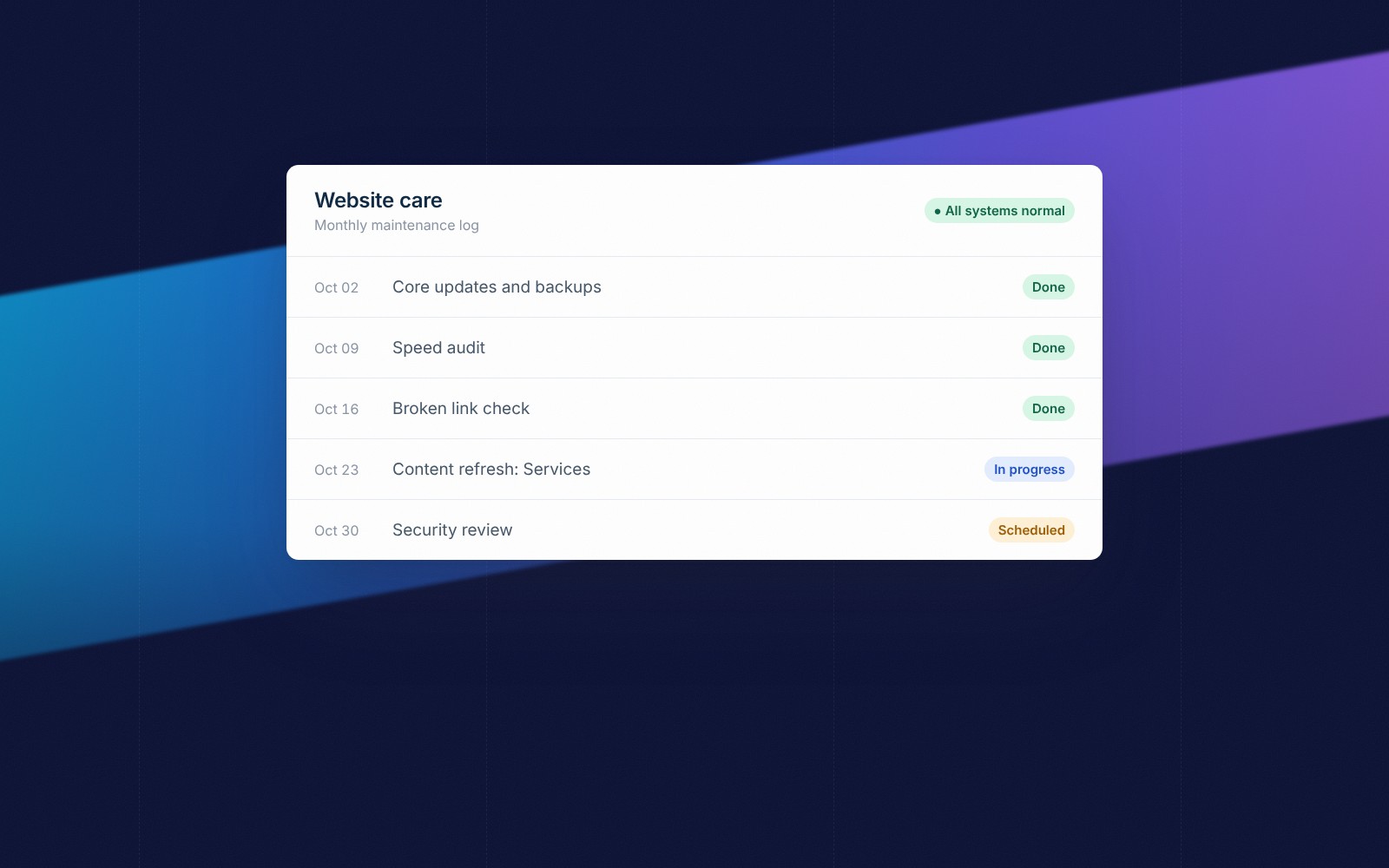
Most website problems don’t announce themselves:
Regular checks catch these before customers do.
Search engines and AI tools favor websites that stay current. New articles, updated service pages, recent case studies and news all signal that your business is active.
A site that hasn’t changed in years tells both Google and visitors that nobody’s home.
New services, new team members, new pricing, new results. When your website lags behind your business, it undersells you.
Keep these current:
After launch, you finally have real data: which pages people visit, where they leave, which buttons they click.
Ongoing care means using that information. Clarify a confusing page. Move an important button. Rewrite a headline that isn’t landing. Small, regular improvements add up to big gains over a year.
Platforms evolve. Integrations change. Third-party scripts break. Keeping an eye on updates, backups and site health protects the investment you made in building it.
A website isn’t a brochure you print once. It’s a living part of your business.
A little care each month keeps your site working as hard as the day it launched, and usually harder.